
Blanchard, Peter
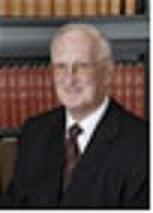
Supreme Court Justice Peter Blanchard
RETIRED 2012 Currently sitting on the Pitcairn Island Court of Appeal
Professional Data:2014 Judge Survey Score (1-10): 7.5 Ranking (out of 63): 33rd
|
|||
| Postion & Titles: | Privy Councillor, DCNZM, Law Commission |
||
| Judge of: | Supreme Court , 2004 | High Court | |
| Specializations and Professional Interests: | Commercial and land law | ||
| Professional Comments: | Officially retired in 2012, giving parting shots in his final address from the bench to those who question judicial judgments by way of recall applications and calling for judges to take a more active role in denying those he labelled vexatious litigants court access generally.In a survey conducted of cases assigned to judges between January 1999 and July 2001 in the Court of Appeal, Justice Blanchard dominated the family law, bill of rights, tax and company law cases. In the last area of law in particular Justice Blanchard sat on more cases than any other permanent member of the court.
Blanchard J was a conveyancing lawyer. The Judge has vast commercial experience and was a company director and partner in Simpson Grierson before going on the bench. Blanchard J has an active mind and can be something of a individualist. The judge is generally conservative, while particularly secretive on matters of the court. Uses the strictest application of law when it assists his personal interests. Conversely, Blanchard J has little use for laws which he considers have lost their utility or he disagrees with. His lack of humility regarding laws has touched on contempt as Justice Blanchard began believing his own press as a knighted justice of the Supreme Court. In SC48/2009, Justice Blanchard stated “We change the law not infrequently”, in response to counsel’s suggestion that the New Zealand Bill of Rights Act 1990 binds judges in their conduct. His personal bias may often be apparent in verdicts where he writes the opinion. Blanchard J will often play the role of ‘gatekeeper’ of the conservative court by simply denying leave for appeals on the basis the law is ‘well settled’ - or similar verbage. He gets by with this because the Law Reports in New Zealand simply publishes edited case summaries written by the Supreme Court where viva voce arguments are denied. Justice Blanchard delivered the Supreme Court’s unanimous decision in Bryson v Three Foot Six (the company behind the Lord of the Rings) in 2005 that changed the employment status of people throughout the film industry. Found that the plaintiff was not an independent contractor but an employee and was therefore free to pursue a personal grievance against the company. In 2003, Justice Peter Blanchard guided a team of 14 authors as Consulting Editor to write the legal text book “Civil Remedies in New Zealand”, the first text to encompass information on remedies in each of the major areas of civil law. The book was published in conjunction with Brookers to enable lawyers to better advise their clients as to the effective remedies in civil law matters. Recommended a law change that was implemented in early 2004 that meant defendants who were agreed by the defence, prosecution and judge to be insane would not have to stand trial for even such things as murder. Blanchard J is prone to obscure law and make up facts when doing so gives the public appearance the New Zealand Supreme Court is fair and impartial. Generally considered to be a ‘right-thinking’ judge, prone to rejecting oversight of the judiciary or anything which impedes Judges abilities to maintain order and protect Crown entities and interests. His natural tendencies to protect his personal interests and his mates often come to the surface in his rulings. New Zealand is currently devoid of any effective judical oversight, which has allowed Blanchard J, along with his like-minded allies on the Bench, Tipping J and McGrath J, unfettered execution of power . The Judicial Conduct Commissioner - set up in 2004 by the Government to hold judges accountable to the rule of law - has failed to find one case out of 300 formal judicial complaints worthy of merely a formal investigation in three years. In 2008, a whopping 10 of the 100 complaints were against Supreme Court judges - a significantly disproportionate number. At the time of Blanchard’s official retirement in 2012, the Commissioner rejected at least three active complaints against Blanchard J by claiming he had no jurisdiction over retired judges. In SC 62/2008 [2008] NZSC 98, Justices Blanchard, Tipping and McGrath ruled that Rule 12 of the High Court Amendment Rules 2004 - which abolished the long-standing requirement that parties to litigation provide identification of their discovery documents - was not a risk to justice or a matter of public or general importance. Their ruling sanctioned the practice of list affidavits having no more than a list of numbers, effectively legalising discovery evasion. Peter Blanchard J demonstrated his activist tendencies in Gregory v Gollan SC4/2009 [2009] NZSC 29 when he concurred with Justices Elias and Wilson to contravene statutory guarantees which “require” trial by jury as provided by the Judicature Act 1908 - once again in favour of ‘judicial discretion’. Amazing, Blanchard J incorrectly declared in this case, “(trial by jury) is now covered by New Zealand legislation which makes it clear that proceedings are to be tried by judge alone unless the Court exercises its discretion to order trial by jury.” Justice Blanchard is a smart and skilled lawyer, but his personal adoption of the credo that what he thinks is more important than the law - freely admitting in open court to “changing the law not infrequently” - has put him at odds with many in the legal community who consider the law is more important than any man. |
||
| Background / Education: | Completed an LLM from Auckland University, before gaining a Fulbright scholarship and a Frank Knox Fellowship from Harvard University, where he obtained a further Masters degree in Law. He was a partner in the Auckland law firm Simpson Grierson and director of several listed companies until his appointment to the High Court in 1992. He was a member of the Law Commission from 1990 to 1993. Justice Blanchard was appointed to the Court of Appeal in 1996 and to the Supreme Court in January 2004. For many years he was a consultant to the Auckland District Law Society’s Property and Business Committee. He was a member of the Council of Law Reporting and has served on the Law Society’s Legislation Committee.Justice Blanchard was appointed a Privy Councillor in 1998 and was awarded the DCNZM (Distinguished Companion of the New Zealand Order of Merit ) in 2005 for his services to the judiciary. | ||
| Degrees: | LLM Auckland, LLM Harvard associated fellowship | ||
| Admitted to the Bar: | 1967 | ||
| Company Involvements: | A Peter Blanchard was director of the following: Tenon Ltd (joined with Hugh Fletcher - Husband of the Chief Justice), John Kaldor Fabricmaker NZ Ltd, NZOG Services Ltd, Pike River Coal Ltd, Sinclair Hight Trading Ltd, Consensus Nominees Ltd, Vanda Investments Ltd, National Petroleum Ltd, Resource Equities Ltd, Polymers International Ltd, NZOG Nominees Ltd, Ambro Metals Ltd, Petroleum Resource LtdSon Gregory Peter Blanchard Director Kensington Swan Solicitors Nominee Ltd fellow Directors BLANCHARD, Greg Peter BOOTH, Christopher John, BUETOW, Paul Phillip, CAMPBELL, David Andrew, DALGLEISH, Martin Hugh, EDMUNDS, Deborah Anne, ENRIGHT, Robert, FITZGERALD, Gerald Fraser, GUNDERSEN, Bryan Norman, GUSTAFSON, Brett , HAYNES, Ian Leslie, HORNSBY-GELUK, Susan Leanne, IRELAND, David Kenneth, JOHNSTON, Ross Stuart, KIMPTON, Clayton, John Legard,, LATIMER, Jane Elizabeth, LEARMONTH, Patrick Murray, LEWIS, David Gwyn, LIM, Wei-Ling, LOWCAY, Quentin, MACOVOY, Timothy, MARK, Simon Philip, MEADS, John William, MISSINGHAM, Peter Frederico, MOORMAN, David, MULLIGAN, Patrick Herd, NOAKES, Robert Manwarring, REES-THOMAS, Simon Leonard, SCOTT, Nicholas Raymond, SEEBOLD, Nigel Anthony, SHILLSON, David, SKELTON, Andrew Cunningham, SPEAKMAN, Peter Russell, TURLEY, Donald James, WHEELDON, Sheana, WILLIAMS, Sherwyn Stanley,
All join Tenon Board 5 June 1991 : |
||
Personal Data |
|||
| Born: | 2/08/42 New Zealand |
Sex: | Male |
| Married: | 1968 Judith Isabel Hight |
Children: | 2 (Gregory Peter b.1972 (now Kensington Swan Company director) & Jacqueline b.1975) |
| Interesting Relationships and Coincidences: | Wife is active in the arts. Son is a lawyer with Kensington Swan. Daughter Jacqueline is a photographer. | ||
| Miscellaneous: | Humble recipient of his many honors. Reported to be something of a poet at Kings College, as well as a movie aficionado. | ||
The Judges of the Supreme Court | Courts of New Zealand
| Justice Peter Blanchard completed an LLM from Auckland University, before gaining a Fulbright scholarship and a Frank Knox Fellowship from Harvard … www.courtsofnz.govt.nz/about/supreme/judges.html - 22k - Cached - Similar pages |
Judge Peter Blanchard, Kiwis First - Judge Peter Blanchard, New …
| A Peter Blanchard was director of the following: Tenon Ltd (joined with Hugh Fletcher - Husband of the Chief Justice), John Kaldor Fabricmaker NZ Ltd, … www.kiwisfirst.co.nz/index.asp?PageID=2145845340 - 30k - Cached - Similar pages |
Waitangi Tribunal - About the Reports
| Peter Blanchard. Also appearing:. Tony Avery-Ministry of Agriculture and Fisheries …..Peter Blanchard. Submissions and evidence were received from: … www.waitangi-tribunal.govt.nz/reports/viewchapter. |
Ngai Tahu Land Report
| File Format: PDF/Adobe Acrobat - View as HTML Peter Blanchard. Also Appearing:. Evan T Alty-Department of Conservation ….Peter Blanchard. Also appearing:. Tony Avery-Ministry of Agriculture and … www.waitangi-tribunal.govt.nz/scripts/ |
Otago District Law Society
| Civil remedies in New Zealand / by Rt Hon Justice Peter Blanchard (Consulting Editor) 2003 Defamation Gatley on libel and slander 9th ed. 1998 … www.odls.org.nz/library/holdings.html - 48k - Cached - Similar pages |
News from the University of Waikato School of Law
| Justice Peter Blanchard of the Supreme Court recently gave the Harkness Henry Lecture at the Waikato Law School. His theme was ‘Approaches to Business … www.waikato.ac.nz/law/news/2005/1105_harkness.shtml - 11k - Cached - Similar pages |
New Zealand Parliament - Property Law Bill - Second Reading
| The work behind this bill was done by Justice Peter Blanchard, as was mentioned by my colleague Mr Finlayson. Justice Peter Blanchard is a commissioner with … www.parliament.nz/…/Debates/Debates/e/1/ |
News 2005 | NZCPL| Victoria University of Wellington
| … around New Zealand as well as Professor Peter Hogg from Canada. … of the Supreme Court (and those appearing before it) by Justice Peter Blanchard, … www.victoria.ac.nz/NZCPL/events/news.aspx - 24k - Cached - Similar pages |
New Zealand Law Review - Co-Editors
| The Right Honourable Justice Peter Blanchard Supreme Court of New Zealand. Andrew Brown QC Barrister, Auckland. Bernard Brown … www.nzlawreview.org.nz/editors.html - 17k - Cached - Similar pages |
Davis Law Library - COMLAW 303 - LEARN - University of Auckland …
| Davis Desk Copy KN310 K1 KEA 2002; Law of Company Receiverships in New Zealand and Australia / by Peter Blanchard and Michael Gedye. Butterworths, 1994. … www.library.auckland.ac.nz/ |
