
YOUNG, William Gillow Gibbs Austen

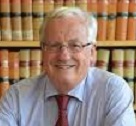
Supreme Court Justice William YOUNG
Professional Data:2014 Judge Survey Score (1-10): 7.4 Ranking (out of 63): 43rd
|
|||
| Postion & Titles: | QC, Former President of the Court of Appeal, knighted by the New Zealand government in 2009 |
||
| Judge of: | Supreme Court 2010 | Previously High Court Christchurch, 1997 | |
| Specializations and Professional Interests: | Politics and litigation, Criminal practice committee 2004 | ||
| Professional Comments: | Justice Willy Young has long political ties and connections developed within the Serious Fraud Office in the days before it was exposed as a political animal.William Young J has astutely climbed the judicial ladder, trumping fellow justice Robert Chambers (the more intellectual candidate) for the Court of Appeal presidency in 2006 and with his appointment to the Supreme Court in late 2010.
“Sir” William Young is adept at the dispensing and collecting of political favours, going back to his days as a SFO lawyer when he unduly protected his cousin John Austen, then Chairman of Fortex (meat works) from prosecution in a company fraud that saw hundreds of hard-working Kiwi’s cheated out of vast sums of money by his cousin and other management. Two directors were convicted of criminal fraud and were sent to prison but Judge Young’s cousin was never prosecuted. Though William Young J was working for the Serious Fraud Office, he fed his cousin inside information, charging him $42,000 for this information which successfully evaded the SFO prosecution. Winston Peters was the first to expose William Young’s sordid legal dealings in Parliament in the 1990’s. Justice Young has demonstrated a restrictive view on human rights, both on the Court of Appeal and the Supreme Court. In 2011, in Attorney General v Chapman, Young J joined with McGrath and Gault JJ in the majority ruling that violations of human rights guaranteed under the New Zealand Bill of Rights Act 1990 and International Convention are not enforceable against judicial officers. Elias CJ and Anderson J dissented. In the seminal rights case of Brooker v Police, Young wrote the Court of Appeal opinion, ruling that a peaceful protest on a residential street amounted to “conduct… disorderly and objectionable. …I believe the appellants were properly convicted.” In 2007, the Supreme Court of New Zealand overturned his decision. Also in 2007, in Siemer v Stiassny, Justice Young wrote the opinion that protected Auckland insolvency accountant Michael Stiassny from an accounting corruption scandal which threatened to expose $500 Million in inflated valuations at power lines company Vector Energy designed to manipulate the sharemarket (William Young’s brother Neville was a director of the Electricity Commission). The Supreme Court later ruled Judge Young was not biased at the same time they refused to hear the evidence. Justice Young had unsuccessfully tried to suppress the hearing transcript which showed he had altered witness testimony of Alan Robert Garret under cross-examination. Young J enjoys a good intellectual debate but is basically lazy, generally taking very little in the way of notes in proceedings. Young’s appointment as President of the Court and then the Supreme Court were compromises. Justice Young’s sordid past is considered by some to provide a check to his ego and personality overshadowing or putting him in conflict with his judicial peers. Justice Young is intoxicated by the baubles of power and was routinely chauffered around Wellington in a black government limousine back when he was on the Court of Appeal. (The Ministry of Justice refused an Official Information Act request from kiwisfirst requesting to know how much his chauffer and limousine is costing taxpayers on the basis courts are “independent” of government). Supreme Court Justice William Young was known to be almost fixated on preventing transparency into conduct within proceedings and in the conduct of the Court in particular. In 2010, William Young was instrumental in a formulating a policy shift (along with Mark O’Regan, Susan Glazebrook JJ and Judge Roderick Joyce of the Rules Committee) which severely limited parties’ access to transcripts in their own proceedings, even for the expressed purpose of supporting an appeal. The Registrar has been instructed to respond to such requests with the statement “Consideration of appeal options should be by reference to the Court’s judgment, not what was said at the hearing”. The Court of Appeal now routinely refuses to release transcripts to the parties on the spurious ground it costs the court money - even where the parties have offered to pay for the service. Justice William Young is nonetheless conscious of his personal image in orchestrating such Machiavelian measures to prevent transparency into Court proceedings and consequently attempts to portray himself as being above the fray. If Justice Young could escape his criminal past as a lawyer, and shake off the corrupting effects of power, he might be an honourable judge. Colleagues remember a young lawyer who was sensitive and level-headed. The problem for now is that Justice Young is beholden to too many shady characters to break into being his own man at this stage of his life. |
||
| Background / Education: | Educated at Christ’s College (high school). Graduated LLB (Hons) from the University of Canterbury and later gained a PhD from Cambridge University in 1978.He joined the Christchurch firm of R A Young Hunter and Co in 1978, leaving in 1988 to practise as a barrister. He was appointed a Queen’s Counsel in 1991, to the High Court in 1997 and to the Court of Appeal in January 2004. Justice Young became President of the Court of Appeal in February 2006. | ||
| Degrees: | LLB (Hons) Canterbury, | ||
| Admitted to the Bar: | 1978 | ||
| Company Involvements: | Shareholder, Byron Properties Ltd | ||
Personal Data |
|||
| Born: | 14/04/1952 New Zealand |
Sex: | Male |
| Married: | 1979 Susan Mary |
Children: | 3 (Nicolas Williams Austen b. 1982, Charlotte Rose b. 1984, Thomas Edwin Henry b. 1988) |
| Interesting Relationships and Coincidences: | Willy’s brother Neville Young is a former National Party President and director of the Electricity Commission. | ||
| Miscellaneous: | Not particularly bright and has an extensive history as a dishonest lawyer. These character weaknesses make him an easy mark for exploitation by powerful forces. | ||
| Justice William Young graduated LLB (Hons) from the University of Canterbury and later gained a doctorate from Cambridge University. … www.courtsofnz.govt.nz/about/appeal/judges.html - 22k - Cached - Similar pages |
Simcock’s Appeal Dismissed
| William Young J. Appearances:, J R Billington QC for Appellant … there has not been a miscarriage of justice for the purposes of 385(c) of the Crimes Act … www.flatrock.org.nz/news/r_v_donald_hugh_simcock.htm - 82k - Cached - Similar pages |
| … of legislative policy: Ruminations on the impact of the Sentencing Act 2002 on sentencing practice and prison musters, The Hon Justice William Young… www.justice.govt.nz/lac/ |
Annual Reports - Institute of Judicial Studies: Annual Report: 1 …
| The Honourable Justice William Young, Governing Board and Court of Appeal & High Court Education Committee; His Honour Judge P D Mahony, Family Court … www.justice.govt.nz/pubs/courts/ [ More results from www.justice.govt.nz ] |
Speech Chief Justice William H. Rehnquist - April 9, 2001
| REMARKS OF THE CHIEF JUSTICE WILLIAM H. REHNQUIST … Chief Justice Warren himself married a young widow born in Sweden named Nina Palmquist Meyers. … www.supremecourtus.gov/ |
Chapman Tripp - Resource Library - Supreme Justice:
| The Court of Appeal (Justices McGrath, Glazebrook, O’Regan and Hammond, with Justice William Young dissenting) held that: … www.chapmantripp.co.nz/resource_library/ |